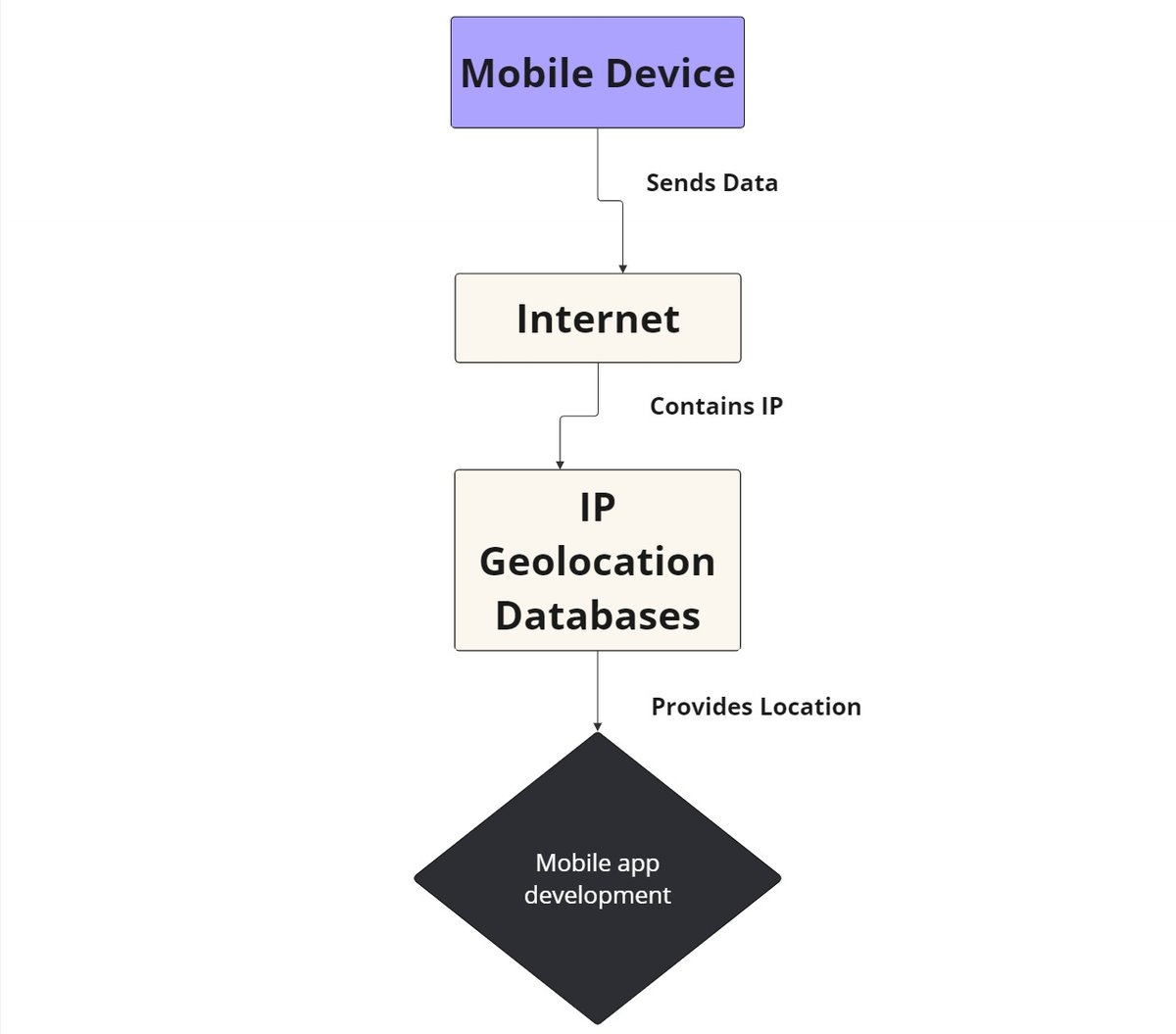
In the labyrinthine world of digital threats, knowing where an attack originates can be as crucial as knowing what it is. This is precisely where IP Geolocation & Security Testing emerges as a frontline defender, transforming raw IP addresses into actionable intelligence that fortifies your digital systems against a relentless tide of cyberattacks. Forget static defense; we're talking about a dynamic, location-aware security posture that anticipates and neutralizes threats before they even knock on your digital door.
At a Glance: Why IP Geolocation Matters for Security
- Pinpoints Threats: Instantly identify the geographical origin of suspicious activity, from login attempts to data exfiltration.
- Detects Evasion Tactics: Uncover VPNs, proxies, and TOR networks often used by attackers to mask their true location.
- Enhances Fraud Prevention: Compare user location with billing addresses to detect credit card fraud and account takeovers.
- Customizes User Experience & Security: Deliver region-specific content while simultaneously applying localized security policies.
- Bolsters Incident Response: Gain critical context for security alerts, accelerating investigation and remediation.
- Supports Compliance: Ensure data residency and adhere to geo-specific regulations.
The Invisible Shield: Understanding IP Geolocation in Security
At its core, IP geolocation maps an IP address to a real-world geographic location. But in the realm of security, it's far more than just country, city, or coordinates. It's about revealing a digital identity, understanding intent, and assessing risk based on location, network type, and associated threat intelligence. Think of it as a crucial piece of a larger puzzle, providing context that traditional security tools often miss.
When an unknown IP address attempts to access your network, for instance, a robust IP geolocation service doesn't just tell you it's from "Germany." It can tell you if that IP is known to be a VPN server, a residential proxy, a TOR exit node, or even part of a botnet. This additional layer of insight transforms a simple network log entry into a potent security alert. It's the difference between seeing a car driving down your street and knowing if that car is registered to a known criminal, or just a new neighbor.
Beyond Borders: Key Data Points IP Geolocation Unlocks
A comprehensive IP geolocation service goes beyond basic mapping, offering a rich tapestry of data points essential for security analysts and developers alike. These insights empower you to make more informed decisions, from blocking malicious traffic to tailoring user experiences.
- Granular Geolocation Data: This includes country, region, city, postal code, latitude, and longitude. Crucial for geo-targeting, content localization, and enforcing geographical access restrictions.
- Critical Security Insights: Detects the presence of VPNs, anonymous proxies, TOR nodes, and identifies cloud providers. Many services also provide a 'threat score' indicating the likelihood of malicious activity originating from an IP.
- Network and Hosting Information (ASN Lookup): Identifies the Autonomous System Number (ASN), the organization that owns the IP address range (e.g., an ISP, a corporation, or a hosting provider). This helps you understand the network context and potential origins of traffic. For a deeper dive into how these identifiers work, you can learn more about IP generation and network fundamentals.
- Time Zone and Currency Details: Essential for time-sensitive operations, localized content, and financial transactions.
- User Agent Parsing: Extracts details about the user's browser, operating system, and device from the user agent string, adding another layer of context to security events.
- IP Abuse Contact Information: Provides data on malicious IPs, details on abuse contacts, and incident history, streamlining the process of reporting and mitigating ongoing threats.
Putting IP Geolocation to the Test: Practical Security Applications
The real power of IP geolocation lies in its actionable applications. It's not just data; it's a strategic asset that can be woven into various aspects of your digital security framework.
Real-time Fraud Detection
Imagine a customer trying to make a high-value purchase from a location thousands of miles away from their registered billing address, while simultaneously using a known proxy server. IP geolocation instantly flags this anomaly. It's indispensable for:
- Credit Card Fraud Prevention: Comparing transaction location with cardholder data.
- Account Takeover (ATO) Detection: Flagging logins from unusual geographic locations or suspicious network types.
- Ad Fraud Mitigation: Identifying bots or fraudulent clicks from non-target regions.
Enhanced Access Control & Risk-Based Authentication
Instead of blanket policies, IP geolocation allows for nuanced access controls.
- Geo-fencing: Restrict access to sensitive resources to specific countries or regions.
- Suspicious Login Alerts: Trigger multi-factor authentication (MFA) or block access entirely if a login attempt comes from an improbable location (e.g., impossible travel scenarios).
- Content Rights Management: Enforce geographical licensing restrictions for digital media.
Bot and DDoS Mitigation
Bots, often originating from distributed networks, can wreak havoc. IP geolocation helps identify and mitigate these threats.
- Botnet Detection: Pinpointing IP addresses associated with known bot activity or unusual traffic patterns.
- DDoS Attack Analysis: Understanding the geographic distribution of attacking IPs to better filter and block malicious traffic.
Threat Intelligence & Incident Response
When an alert fires, every second counts. IP geolocation provides immediate context.
- Enriching SIEM Data: Integrating geolocation data into your Security Information and Event Management (SIEM) system helps prioritize and understand security events.
- Identifying Attacker Origins: Quickly ascertain the general location and network type of a threat actor, aiding in forensics and attribution.
- Proactive Blocking: Block traffic from high-risk countries or networks known for cybercrime.
Compliance and Regulatory Adherence
For businesses operating globally, IP geolocation is vital for adhering to diverse regulatory landscapes.
- Data Residency: Ensuring customer data is stored and processed in compliance with local laws.
- Export Controls: Preventing the export of sensitive goods or services to embargoed regions.
Case Study: Integrating IPGeolocation with Microsoft Security Copilot
To truly appreciate the operational impact of IP geolocation, let's look at its integration with powerful security platforms. Microsoft Security Copilot, an AI-powered security analysis tool, becomes even more potent when enriched with real-time IP intelligence.
By incorporating IPGeolocation's robust API, Security Copilot can automatically pull in comprehensive details about any IP address or domain encountered during an investigation. This means deeper insights into potential threats, faster analysis, and more informed decision-making for security teams.
Step-by-Step: Setting Up the IPGeolocation Plugin in Security Copilot
Getting IPGeolocation up and running in Security Copilot is straightforward, requiring just a few simple steps to unlock a new layer of threat intelligence.
- Obtain an IPGeolocation API Key: First, you'll need an active API key from the IPGeolocation service. This is your credential for accessing their data.
- Sign in to Microsoft Security Copilot: Access your Security Copilot environment.
- Access "Manage Plugins": From the prompt bar within Security Copilot, select the dedicated Plugin button.
- Find IPGeolocation and "Set up": In the list of available plugins, locate "IPGeolocation" and click on the "Set up" option next to it.
- Paste Your API Key and Save: A field will appear. Paste your obtained API Key into the "Value" field and then select "Save."
Once saved, the IPGeolocation plugin is enabled and ready to augment your security investigations!
Unlocking Insights: Sample Prompts for Security Copilot
With the plugin active, you can leverage natural language prompts to query IPGeolocation directly within Security Copilot. Here are some examples to get you started:
- For comprehensive details:
Give me complete details including threat score and security data, geolocation, time zone info, and hostname for IP address 49.12.212.42. - For time and currency:
Provide the time zone and currency associated with the IP address 49.12.212.42. - For network information:
What ASN is associated with the IP address 49.12.212.42? - For location insights:
Give me all available location insights for the IP address '8.8.8.8' utilizing IPGeolocation. - For security posture:
Is the IP address 146.70.250.27 a VPN or an attacker IP address according to IPGeolocation? - For domain lookup:
Provide all available insights, including location, security, time zone, and other relevant data, for the domain example.com using ipgeolocation.
Note: While a free or developer plan allows up to 1,000 API requests per day for basic information, features like security, domain lookup, and hostname lookup generally require a paid subscription to IPGeolocation for full functionality. Paid plans also offer unlimited requests.
Troubleshooting Common Issues
Even with seamless integrations, hiccups can occur. Here’s how to address common issues with the IPGeolocation plugin in Security Copilot:
- Errors like "Couldn't complete your request" or "An unknown error occurred":
- First, ensure the IPGeolocation plugin is actively turned on in the "Manage Plugins" section.
- This error can sometimes appear if the lookback period in your Security Copilot prompt is excessively long. Try adjusting the timeframe.
- If the issue persists, a simple sign out and sign back into Security Copilot often resolves it.
- Prompts not invoking correct capabilities:
- This could be due to conflicts with other custom plugins or plugins that offer similar functionalities. Review your enabled plugins and consider temporarily disabling others to isolate the issue.
Deep Dive: IPGeolocation's Comprehensive Service Offerings
The specific services offered by a provider like IPGeolocation underscore the breadth of possibilities when integrating IP intelligence. These services are designed to cater to various needs, from real-time API lookups to comprehensive downloadable databases.
Key API Services:
- Accurate IP Geolocation API: Offers IPv4/IPv6 lookup, physical location, and crucial detections like TOR, Proxy, VPN, general threats, robots, and user agents.
- IP Security API: Provides cyber threat intelligence to detect VPNs, proxies, bots, and cloud providers, complete with a threat scoring mechanism.
- ASN API: Retrieves detailed ASN information, including IP ranges, peering details, and associated organization data.
- IP Abuse Contact API: Delivers insights into malicious IPs, abuse contacts, and historical incident data.
- Time Zone API: A versatile API providing sunrise/sunset/moonset/moonrise timings, current time, date, year, and time zone information based on IP, GPS coordinates, country, or city.
- User Agent Parser API: Extracts detailed browser, device, and operating system information from user agent strings.
IP Intelligence Databases:
Beyond real-time API calls, IPGeolocation also offers comprehensive databases for those requiring self-managed solutions. These include: - IP Location
- IP Security
- IP to ASN
- IP to Company
- IP Abuse Contact
- IP Whois
- ASN Whois
- Residential Proxy
- IP to Hosting
These databases provide extensive IPv4 and IPv6 coverage, are refreshed daily (or multiple times per week for core accuracy), and are available in MMDB, CSV, and JSON formats, offering flexibility for integration into various systems.
Core Features for Reliability and Performance:
Any robust IP geolocation service must also offer foundational features that ensure reliability and performance: - Global Availability: Servers strategically located in key regions (US, Germany, France, UK, Australia, Singapore, India) for low-latency lookups worldwide.
- High Uptime SLA: A 99.99% Uptime Service Level Agreement for paid plans, ensuring consistent service.
- Unlimited DDoS Protection: Leveraging services like Cloudflare for continuous protection against denial-of-service attacks.
- Multilingual Responses: Data available in multiple languages, including English, Spanish, German, French, and Japanese.
- Frequent Database Updates: Databases are updated multiple times per week to maintain the highest level of accuracy.
- Fast IP Lookup Speed: Averaging less than 40ms, ensuring minimal impact on application performance.
Choosing Your Tools: API vs. Databases for Scalability and Privacy
When integrating IP geolocation, you typically have two main routes: using a real-time REST API or downloading raw databases. Each has its advantages depending on your specific needs for speed, scalability, and data privacy.
When to Use the REST API:
- Real-time Lookups: Ideal for applications that need up-to-the-minute data for individual IP addresses, such as fraud detection during a transaction or real-time content personalization.
- Lower Maintenance: The service provider handles all database updates, infrastructure, and scalability. You just make an API call.
- Dynamic Data: If you need to query IP addresses that change frequently or are encountered sporadically.
- Limited Infrastructure: When you don't want to manage large datasets or run your own lookup servers.
When to Use Downloadable Databases (MMDB, CSV, JSON): - High Volume & Low Latency: For applications that require millions of lookups per second where API call latency is unacceptable, or where internal processing is preferred.
- Offline Access: Essential for systems that may operate without constant internet connectivity or require lookups within a highly secure, air-gapped environment.
- Maximum Privacy & Control: By hosting the data yourself, you maintain full control over the data and avoid sending IP addresses to an external service for every lookup. This can be crucial for stringent data privacy regulations.
- Custom Integration: Allows for deep integration into existing systems or custom lookup logic without relying on external endpoints.
- Cost Efficiency at Scale: For extremely high volumes, managing an internal database can sometimes be more cost-effective than making millions of API calls.
The choice often comes down to a trade-off between convenience (API) and control/performance (databases), with many organizations using a hybrid approach.
Addressing the "What Ifs": Common Questions & Considerations
Even with its clear benefits, IP geolocation often raises questions. Let's tackle some common concerns.
How Accurate is IP Geolocation?
IP geolocation is remarkably accurate for country-level identification (often 95-99%). City-level accuracy can vary more, typically ranging from 50-80%, especially in densely populated areas or for mobile IPs. Several factors influence accuracy:
- IP Allocation Data: The core data comes from regional internet registries (RIRs) and ISPs.
- Network Infrastructure: The physical routing paths of internet traffic can sometimes mask the true origin.
- Mobile vs. Fixed IPs: Mobile IP addresses, particularly those assigned dynamically by cellular carriers, can be harder to pinpoint precisely due to how towers and networks are structured.
- Proxy/VPN Usage: As we've discussed, these intentionally obscure a user's true location.
Reputable IP geolocation providers constantly update their databases using multiple data sources and sophisticated algorithms to maximize accuracy.
Can IP Geolocation Be Bypassed?
Yes, users can intentionally obscure their true IP location using VPNs, proxies, and TOR networks. However, advanced IP geolocation services don't just tell you the proxied location; they often detect the presence of these anonymizers. This distinction is vital for security: knowing an IP is coming from a VPN isn't a failure of geolocation; it's a critical security insight that flags potentially evasive behavior. Your security rules can then adapt, perhaps requiring additional authentication or blocking the connection outright if it's from a known high-risk VPN.
What About User Privacy?
IP geolocation services typically process IP addresses, which are not considered personally identifiable information (PII) in the same way a name or email address is, though they can be linked to a general location. Reputable services focus on providing non-PII data like country, city, ASN, and security flags. They do not collect or share individual user browsing history or personal data. When using IP geolocation, it's essential to integrate it responsibly and in compliance with privacy regulations like GDPR or CCPA, ensuring you're transparent about data usage if necessary.
Is IP Geolocation Expensive?
Many IP geolocation services, including IPGeolocation, offer a range of plans. Often, there's a free tier or developer plan that allows a certain number of API requests per day (e.g., 1,000 requests) for basic information. This is perfect for testing or for applications with low usage. Paid plans typically offer higher request limits (often unlimited), access to premium features like detailed security insights, domain lookups, and dedicated support, with pricing models often based on query volume or specific feature sets.
Your Next Move: Empowering Your Digital Defenses with Location Intelligence
In a world where digital boundaries are constantly challenged, embracing IP geolocation for security testing is no longer a luxury—it's a necessity. It provides the essential context that transforms abstract digital signals into tangible insights, allowing you to detect threats more accurately, respond more swiftly, and build a more resilient digital infrastructure.
Whether you're battling sophisticated fraudsters, fending off bot attacks, or simply striving to enhance your security posture, integrating IP geolocation intelligence offers a powerful advantage. Explore the capabilities, understand the data it provides, and consider how a service like IPGeolocation can seamlessly integrate into your existing security operations, turning every IP address into a potential ally in your fight for digital security. Your digital systems deserve this layer of intelligent, location-aware protection.